.png?width=344&height=67&name=logo_caser%20(2).png "logo_caser (2)")
.png?width=243&height=47&name=logo_caser%20(2).png "logo_caser (2)")

September 16, 2022

Caser Expat Insurance
Sales
Customer Care
It is hard to read the news right now without seeing articles about the changing economy and cost-of-living increases, so, it is only natural that many people are looking into how they can make savings on their outgoings in different areas of life. From grocery shopping to utility bills, there are numerous ways we can shop around and hopefully find a better deal.

But is not just a question of tightening our belts to save some money on smaller items. When it comes to big purchases and monthly expenditure, such as owning and driving a car, it is even more important to be informed and make comparisons regarding maintenance, insurance cover and running costs.
And nowadays, this can seem even more confusing, as it is not just a case of looking at the size, horsepower and models of different cars, but also the big debate regarding electric cars compared to gas/petrol cars that has been thrown into the mix.
As with many new technological products, when they were first introduced into the market, the initial high purchase prices of electric cars seemed unrealistic to the regular customer. But now, as more affordable models are hitting the market, many people are curious about the long-term savings they could make if they switch from gas/petrol to an electric vehicle.
You many think that, because an electric car includes cutting edge technology and is more high-spec, it would be much more expensive to maintain than a traditional fuel powered car. However, this is actually a myth. Here are a few of the reasons why…
Just like in the human body, the heart of the vehicle – the engine - is a complex machine with numerous components that must work together to provide the power required to give it life.
A conventional fuel engine (or ICE: internal combustion engine) has hundreds of moving parts, which need to be maintained and repaired to keep the engine in good working order. Over time, there is more likelihood that one of these hundreds of components such as the crankshaft, carburettor, pistons will suffer from wear and tear, or become defective. Fuel engine faults can be very costly to repair as mechanics need to strip down the engine to investigate and fix the problem. This can be a long and costly process as the average labour costs of a car mechanic is around 50-100€ per hour, so the repair bill will soon add up.
In comparison, an electric car engine has far fewer parts, thinks dozens not hundreds! This significantly reduces the probability of complications, and the associated investigation and repair time needed to fix any issues. In addition, an electric car does not require the user to make regular oil and water checks and changes. That also reduces the possibility that the fluid levels will get too low, either from a leak, or lack of attention from the owner, which can completely blow the engine altogether.
One of the main concerns for buyers of electric cars is the cost of replacing an EV battery. However, most manufacturers now offer warranties of 8 years or up to 160,000 km, providing reassurance to drivers. In reality, modern EV batteries are designed to last 15–20 years, with gradual performance decline rather than sudden failure. While replacement costs can still be high, they have been falling steadily as technology improves.
These warranties generally include cover for typical defects regarding the electric motor and invertor and can also include charging equipment. This is all part of the package to give consumers peace of mind that the battery will not let them down and an electric car is a good long-term investment.
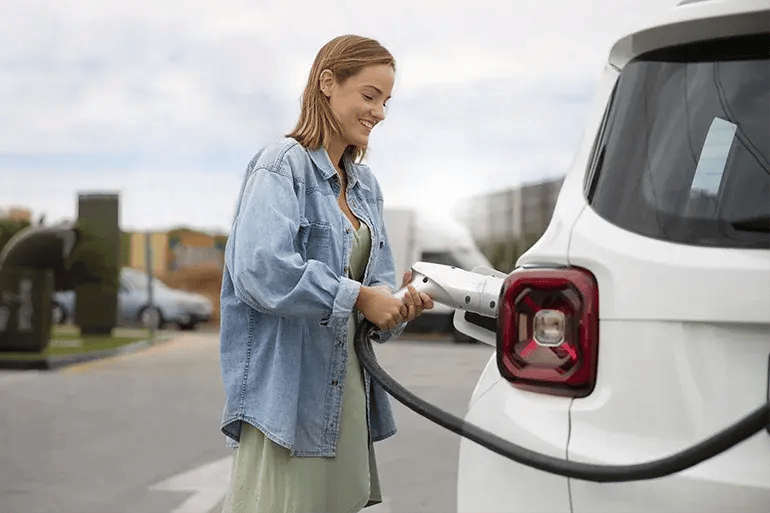
As mentioned briefly above, the maintenance costs of gas/fuel powered cars, include regular check-ups by a mechanic, which are usually done in the annual service, or per every 15000 kilometres. This is not only costly in terms of paying physical cash for a mechanics time, but also costly in terms of your own time and convenience. I am sure we have all experienced the hassle of trying to find the time to take and leave your car in the garage and live your normal life without wheels!
EV´s do not require maintenance checks as regularly, such as oil checks/changes, fuel filters, transmission fluid, drive belts, spark plugs etc and other types of things included in a normal service or tune-up. But please note, if you are opting for a Hybrid electric vehicle (HEV) you will still be required to do these checks due to the hybrid nature of the engine.
In terms of electric cars, other maintenance requirements are similar to a normal gas/fuel car, and it is recommended to have it serviced every year to check for general wear and tear of the following:
Tyres and tyre balancing should be checked every 12000 kilometres with the objective of extending their longevity. This is because EV´s have a low centre of gravity and some argue that this can cause tyres to wear out more quickly.
Brakes, brake fluid and brake pads are vitally important, on both types of cars, and should always be high priority. In comparison to gas/fuel cars, the electric car maintenance costs can be lower in this area. This is because EV´s capture kinetic energy as the cars speed is reduced – known as “regenerative braking” – which means that the brake pads are not worn out as quickly and won’t need to be replaced as often.
Cooling system and filters – you don’t need to change oil/fuel filters in an EV, but you do need to check the cooling system and cabin air filter. However[MMT1] , this is not required annually and is recommended every few years or for every 30,000 or so miles driven.
Obviously, this is the million-dollar question, and it is very hard to give a figure, due to the sheer amount of different vehicles and factors in question.
Early studies, such as research by We Predict, suggested that electric vehicles could cost around 30% less to maintain than petrol or diesel cars during the first few years of ownership. More recent data from 2024–2025 supports this trend, showing that EVs typically cost 30% to 50% less to maintain than traditional fuel-powered vehicles.
On average, electric cars cost around $300–$600 per year in maintenance, compared to $900–$1,300 for petrol cars, depending on the model and usage. Over the lifetime of a vehicle, this can translate into savings of approximately $4,000 to $5,000, with EVs often costing about half as much per mile to maintain.
While repair costs for major components can still be higher in some cases, particularly outside warranty, the overall evidence shows that electric vehicles are generally cheaper to maintain in the long term.
These combined incentives help reduce the upfront cost of electric vehicles and improve their overall affordability.

In Spain, switching to an electric vehicle is more attractive thanks to government incentives.
The Plan MOVES III programme offers grants of up to €7,000 towards the purchase of an electric vehicle when scrapping an older car, as well as financial support for installing home charging points.
In addition to national support, many regional and local authorities provide further incentives, including:
These combined incentives help reduce the upfront cost of electric vehicles and improve their overall affordability.
When comparing electric and petrol cars, insurance is another important factor to consider. In general, electric vehicles can sometimes be slightly more expensive to insure, mainly due to their higher purchase price, specialised repair requirements, and the cost of components like batteries. However, the gap is narrowing as EVs become more common and insurers gain more data.
In Spain, both electric and petrol cars require at least third-party cover by law, but many drivers opt for more comprehensive protection to cover damage, theft, and breakdowns. Providers like Caser Expat Insurance offer flexible options including third-party, extended, and fully comprehensive policies, along with benefits such as roadside assistance, legal cover, and accident support. Learn more about car insurance options in Spain.
If you’re considering switching to an electric vehicle, now is the perfect time to do your research and compare your options. Start by comparing models, checking local incentives and car insurance policies, and calculating your potential savings, you might be surprised how much you could save over time.

|
If you are searching for car insurance in Spain, Caser Expat Insurance has the right policy for you! |





Let Us Know What You Thought about this Post.
Put your Comment Below.