.png?width=344&height=67&name=logo_caser%20(2).png "logo_caser (2)")
.png?width=243&height=47&name=logo_caser%20(2).png "logo_caser (2)")

March 26, 2020

Caser Expat Insurance
Sales
Customer Care
Spain has become one of Europe’s best countries for cycling, but it also has strict rules that many expats and tourists do not expect. Cycling in Spain is safe and accessible, although cyclists must follow specific laws regarding helmets, lights, alcohol limits, and road use. Understanding the main cycling in Spain rules before riding can help expats avoid fines and stay safe on the road.
There is, however, a reason so many cyclists fall in love with Spain. Few countries offer this mix of coastal routes, mountain climbs, city bike lanes, café stops, and year-round sunshine. From Valencia’s seafront cycle paths to the winding roads of Mallorca, Spain rewards cyclists generously, provided you know the rules before setting off.

In Spain, cyclists are legally considered road users. This means that most traffic laws applying to cars also apply to bicycles. These are set by the Ley de Tráfico, Circulación de Vehículos a Motor y Seguridad Vial, enforced by the Dirección General de Tráfico (DGT).
These are the essential rules every cyclist should know:
Many expats assume cycling on the pavement is acceptable, especially on quieter streets. In Spain it is prohibited unless there is explicit signage (usually a blue sign) indicating a shared pedestrian/cycling space.
Spain’s cycling legislation was updated in 2025, and several of those changes carry through into 2026. Here is what is new and what cyclists need to know right now:
This is where Spain differs most noticeably from the UK and much of Northern Europe.
Helmets
| Situation | Helmet required |
| Interurban roads (between towns/cities) | Yes |
| Urban roads (inside a town or city), adults | Recommended, not always legally required |
| Children under 16 — everywhere | Always mandatory |
| Uphill sections / tunnels in cities | Yes |
| Competitive cycling events | Yes |
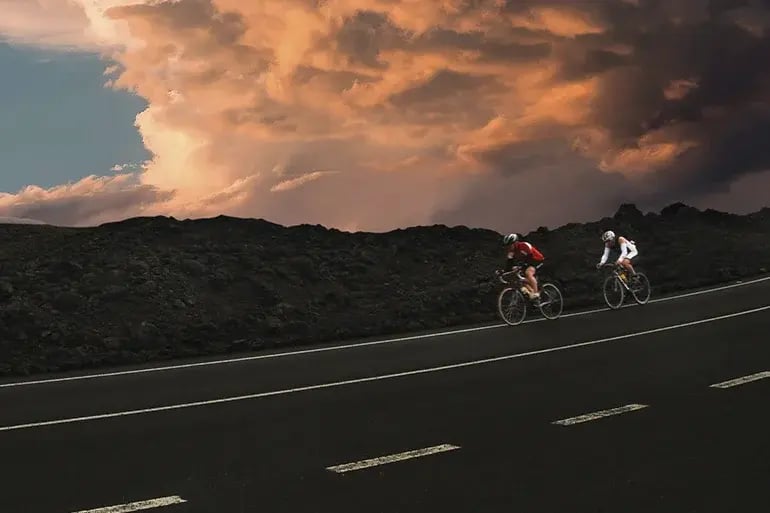
On top of that: front and rear lights are compulsory at night and in poor visibility. A rear red reflector must be always fitted. And a reflective vest is legally required on interurban roads at night, pop one in your back pocket before leaving the city.
 Alcohol limits
 The maximum legal alcohol limit that applies to drivers in general (0.5 g/l of alcohol in blood or more than 0.25 milligrams of alcohol per litre of breath) also applies to cyclists. Like all other road users, cyclists are legally required to take a breathalyser test if requested by a police officer.
Fines for exceeding the liming may rise to 1.000€ and in serious cases, criminal charges may apply.
Cargo bikes are a popular and fully legal solution for families if the bike is certified to carry passengers and children are properly secured.
The good news is that Spain offers excellent cycling infrastructure in many regions. Here's a quick map of your options, and the bits to watch out for in each.
Electric bikes and scooters have become enormous in Spain. The rules hinge entirely on speed:
| Vehicle | Max speed | Licence | Treated as… |
| Pedelec e-bike (EPAC) | 25 km/h | No | Standard bicycle — same rules |
| Speed pedelec / throttle e-bike | > 25 km/h | Yes (moped) | Motor vehicle — register + insure |
| E-scooter (VMP) | 25 km/h | No | Bike lane / 30 km/h roads only |
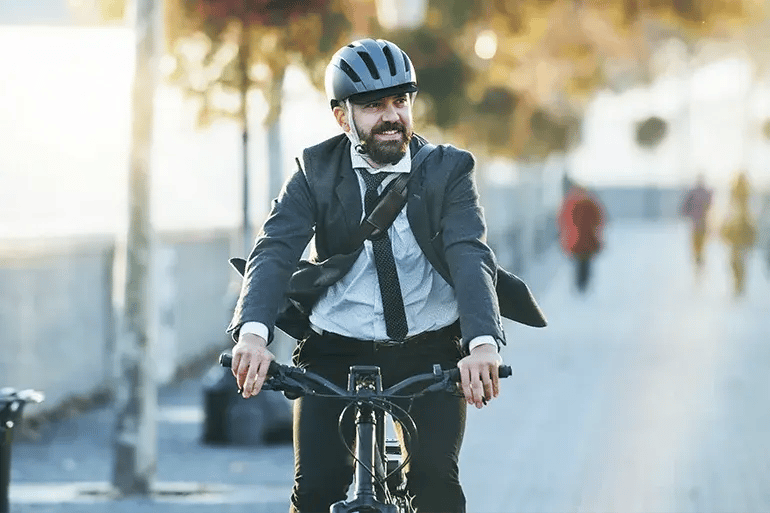
Standard pedelecs (pedal-assist up to 25 km/h) are treated exactly like bicycles, same lanes, same rules, same fines. E-scooters must stick to bike lanes or low speed roads, carry only one rider, and are not permitted on pavements. E-scooter rules vary by municipality, always check local bylaws when you move to a new city.
From January 2026, all Personal Mobility Vehicles (VMPs), including e-scooters, must have third-party liability insurance in Spain. Riding without valid cover can lead to fines of up to 3.000€ and the vehicle being impounded.
Consider this your "please don't learn this the hard way" section. Spanish authorities do enforce cycling in Spain rules, especially during summer and in tourist areas where police checks are more common.
| Infraction | Fine |
| No helmet (where mandatory) | 200€ |
| No lights at night / in tunnel | 200€ |
| No rear reflector | 200€ |
| No reflective vest (interurban, night) | 200€ |
| Using a mobile phone while cycling | 200€ |
| Running a red light | 200€ |
| Cycling on motorway / dual carriageway | 500€ |
| Exceeding alcohol limit | 500€ - 1,000€ |
Cycling in Spain can be one of the best parts of expat life. Early morning rides, coastal roads, mountain climbs, and a café stop halfway through, it’s easy to see why so many people choose to explore the country by bike. But before setting off, it’s important to understand the basic rules that keep both cyclists and drivers safe.
The key points are simple, wear a helmet outside urban areas, use lights when required, stick to bike lanes where available, and follow traffic signals exactly as you would when driving a car. Getting these basics right will help you avoid most fines and reduce the risk of accidents.
It’s also worth making sure you have the right insurance in place. Third-party liability cover is not mandatory for cyclists in Spain, but if you cause an accident, you may be personally responsible for damages and medical costs. And for expats, having health insurance is equally important, especially if you regularly cycle on roads, mountain routes, or longer-distance trails.





Let Us Know What You Thought about this Post.
Put your Comment Below.